Movie Ethnography: Three Viewings

I saw three films in three theaters during Thanksgiving break. They were Thelma, Ladybird and Justice League. It was Saturday I saw Thelma at the Village East Cinema in Manhattan which is a theater that caters to limited release features. As a MoviePass subscriber, I pay $10.99 a month and I can watch one movie a day, but the actual ticket price was $8. I didn’t buy a drink this time because the concession stand was empty. The theater was small, around 40 seats, fold-up when you stand up, and a total of 11 patrons total including me. Most were single viewers; 3 college aged, 1 older woman, 1 older man, and a father-daughter couple. They were quiet during the show, but there was small discussion of what the film was about afterward.

The second film was Ladybird at Kew Gardens Cinemas in Queens. It skews more toward limited release as well and one of the few places in Queens to see smaller films, but there are also wide release features as well. The actual ticket price was $8 and I bought a $4 soda. The theater is around 100 seats and was at 70% capacity so very full. Older people mostly with some couples. The seats are fold-up, packed and there is only one aisle. The audience laughed at the appropriate times, but toward the end a guy started asking what was going on. That got a lot of shushes and shut ups. After it was over, I overheard the old ladies in the row in front say they didn’t like it. One fell asleep and another couldn’t believe how mean the mother was.

In contrast to these theaters, AMC Bay Terrace shows wide release and has recliner seats. The cost of a ticket would be $14.30 and a large soda was $5.60. There are exactly 92 seats, 103 counting reserved handicap seats. Despite that, there was probably under 30 people, some single, couples and a family with young children. They were mostly quiet. I did see the bright screens of a smartphone from a number of patrons. Since this is a definition popcorn flick, there was popcorn on the floor.

Movie Theater Ethnography

Over the break me and a friend binged watch a show on Netflix. I think this experiences was better than my last few movie theater experiences.  Usually, I end up going to the local AMC because it’s the closest to where I live. And pretty much everything about my last few experiences were awful. Th AMC shares a parking lot with several restaurants and a target, meaning you’ll have to fight to find parking.  Once your inside you’ll find that there might not be anyone at the main counter so you’ll have to use one of the machines that only accept card. Scrolling through the selection you’ll find the same handful of movies and at inconvenient run times. Miss the 4pm showing? Too bad the next showing is at 12 am. That doesn’t work with you? It’s ok we have another showing at 2am. And of course the tickets are too expensive, last time I went they were around $14. For less money you can pay a monthly subscription to Netflix and have money to spare to buy at least one avocado.  You can have access to a wider selection of films at watch at whatever time you want. Me and my friend were able to randomly watch a foreign show we never heard of. With the comforts of home viewing you also don’t have to sit through 20+ minutes of commercials, you have no commercials at all. You also don’t have to sit in cold popcorn covered theater. You can be completely comfy on a couch and eat dinner and petting  your friend’s dog.  Now most people would argue against home screenings because the quality of the viewing experience is lower . While agree a large screen and surround sound is nicer than a lap top, my experience hasn’t always been great. For example there were multiple times when the audio levels seem off and once they projected a portion of the film in square and it was cut off. I think Netflix makes up for some of that because you can always rewind if you miss something. Subtitles options are also widely available if you can’t hear or have access to good sound systems.  I think ultimately in terms of price, comfort, and accessibility Netflix wins. I think perhaps the only advantage the theater has is the ability to show you a film on it’s release date. So that being said I will probably drag myself over to watch The Shape of Water over winter break because I really want to see it.

Home Screening – The Killing of Sacred Deer

Over the Thanksgiving break I had the great pleasure of attending a screening of Yorgos Lanthimos’s most recent film, The Killing of Sacred Deer featuring Colin Farrell and Nicole Kidman. This film quickly became one of my new favorites. Lanthimos never disappoints.

Many factors went into making this film the work of art that it is: the colors, camera angles, and most crucial in my opinion, the sound. Almost every single one of our senses are stimulated when watching The Killing of Sacred Deer. There were many low angle shots filmed in the hospital. These shots created a strong feeling of surveillance, which effortlessly ties in with the narrative. Non diegetic sound plays such an important role in this film. One scene in particular displays Martin (Barry Keoghan’s character) as he is tied to a chair and held hostage by Steven (Colin Farrell). His face is beaten up and he momentarily appears tame and calm. Martin continues to talk to Steven, his words picking up speed and taking on more anger he suddenly grabs Steven’s arm and bites down hard. The non-diegetic sound comes in strong and fast. Right after this, Martin takes a big bite into his own arm digging deep into his flesh. At this very moment a piercing high pitch instrumental sound plays. Because I was in a theater with other people, I genuinely thought this sound was someone screaming. This whole scene made me anxious, uncomfortable, and overwhelmed but I loved every second of it. I did not realize until the scene ended that I was actually holding my breath with shock and anticipation.

While watching The Killing of Sacred Deer I picked up on numerous influences from both Stanley Kubrick’s Eyes Wide Shut and Michelangelo Antonioni’s Red Desert. Besides Nicole Kidman’s similar role as the sort of cold, distant wife of a doctor, there was also a similarity in the pacing of both the dialogue and the film as a whole. The most obvious correlation to Antonioni’s Red Desert is the concept of the son losing feeling in his legs. In both films, we learn there is nothing else physically or neurologically wrong with the children except the fact that they cannot walk. Lanthimos takes this idea much farther by making it the first stage in the multiple stages of ailments Steven’s children will experience if he does not follow through and play by Martin’s rules. Another strong influence was color. Of course this film is shot with modern cameras and uses editing to achieve the desired look. Lanthimos did not however, need to spray paint the grass green for extra impact much like Antonioni.  Color was so impactful on the film’s narrative. The hospital was the brightest of white and the blood was the purest of red.

Conclusively, The Killing of Sacred Deer is such a creatively inspiring film. In my opinion, it deserves its own notch on the timeline of film history because of it’s incredibly unique genre bridging presentation. When typed into Google, The Killing of Sacred Deer is labeled as a thriller/mystery but I would say it is so much more than that. Lanthimos blurred the lines of horror, drama, sci-fi, and I would even argue romance.

I am genuinely looking forward to whatever Lanthimos creates next because I have faith that it will be yet another game changer.

Home Screening: Valerian and the City of a Thousand Planets

From the first trailer of Valerian and the City of a Thousand Planets I was excited for the film and felt like it would be good.  Over the summer I never was able to attend the film and the negative critiques did not add to my willingness to try and see it.  So finally when I had the chance to watch it at home I prepared myself for what I felt would be a misread film.  How could something so unique and artistic looking in a wild cinematic world turn out bad?  I was very disappointed.   What came up for me, perhaps because of our recent discussions about women in film, was the very apparent sexism and misogyny placed throughout.

Valerian and Laureline are supposed to be equal partners; it seems at first that the film gives Laureline some power and independence but that quickly disappears.  She is quickly thrown into the damsel in distress trope.  Either needing assistance from Valerian or sitting back on missions while “the men” take care of all the action.  Not to mention it’s somehow far off in the future and when in uniform Laureline is put in a military mini skirt compared to her male counterparts.

This lead me into thinking about how a lot of Sci Fi films get away with having dated ideas about not only women’s roles but heterosexual love and all white casts.  These films take place in the far off future and wow the audience with out of this world experiences and settings.  By doing so directors and writers are able to get away with having over used and ignorant storylines and movie tropes.  It’s 1000 years into the future and humans live with however many species of other aliens and have evolved themselves over that time supposedly.  And yet the plot and characters could be pulled right out of the realities of today.  The cast is majority white, Laureline is given very little power past her sexuality and looks, a very poorly done heterosexual romance is forced down the viewers throats.  The film is pretty to look at but past that not even going into the lack of a good plotline, or even a genuine villain; the film might well have been made in the 20’s with such outdated ideas about women, sexuality and race.

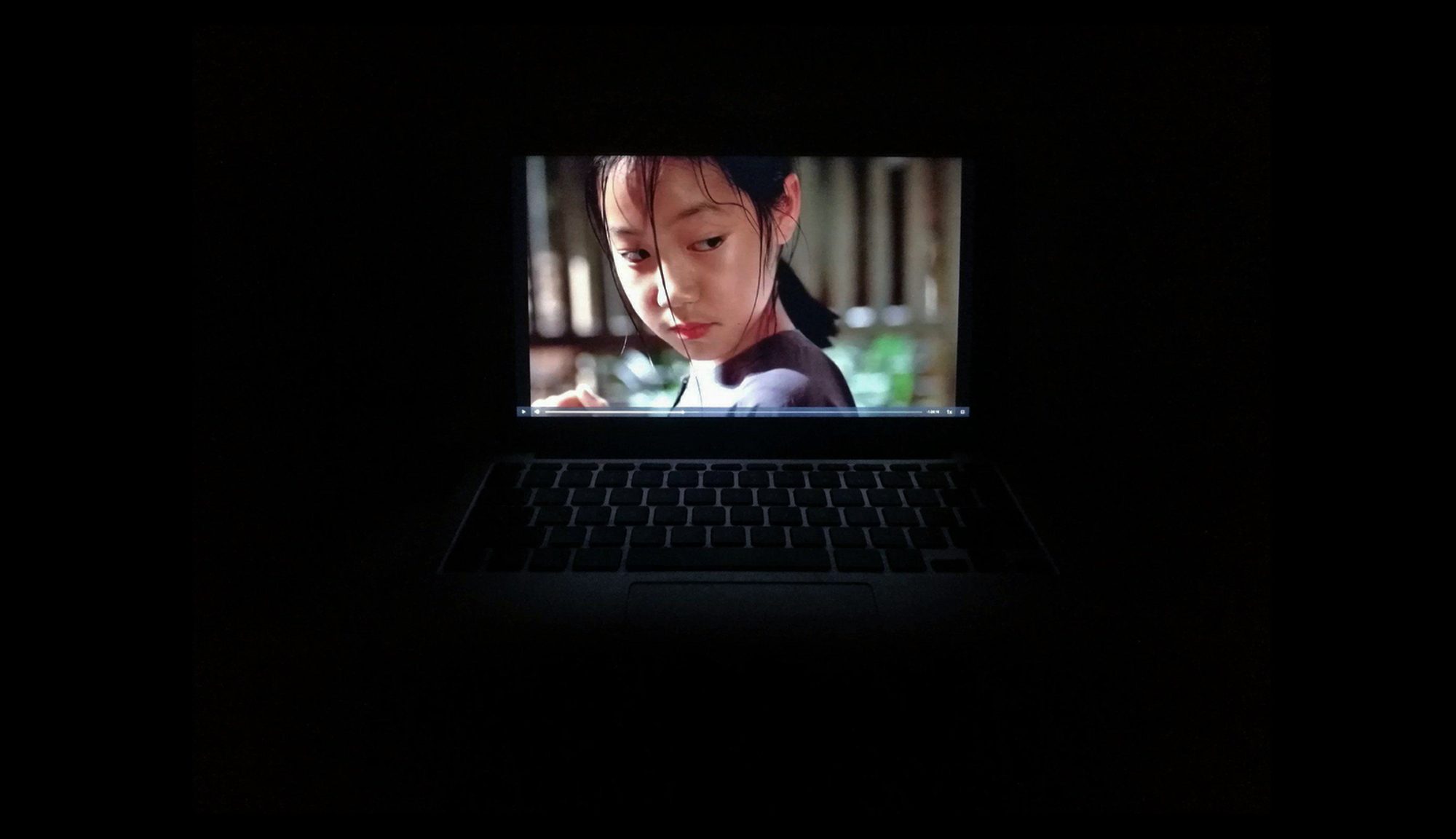
Film Ethnography: Home Screening or Movie Theater?


A few weeks ago, I learned that one of the arguments filmmakers used against the screening of films at home, on a television set, was that the theater experience is an essential component to the movie experience. The idea was that, at home, the viewer does not have access to the dark room (full of movie enthusiasts like yourself), the big screen, and the loud sound systems that movie theaters encompass. While it is true for the most part, they also fail to include the fact that in such theater rooms, an individual lacks any power to control certain aspects of the experience. The only thing one can choose, at times, is where to sit; that means, however, that the majority of viewers will not have the most ideal angle of view; what’s more, if you sit very close to the edge, the left speakers, for instance, might be too loud and throw you off. This is why I think selecting a seat by the center is the best spot. Screening a film at home, on the other hand, also has its cons.

Yesterday, the day after thanks giving, I felt like watching a film. I selected a movie from Kanopy, an online streaming service free to Hunter students. In contrast to movie theaters, where one has a very limited choice of films, I had many films I could jump into either by chance or by rigorous selection. I found a film from 1991 under the category of World Cinema’. I selected The Scent of Green Papaya after a number of times checking out trailers for films within the category on YouTube. For this particular film, though, I did not find any trailers; instead, I found clips which gave me a strong reference point from which I was able to foresee how the film was going be like. Initially, I had whole-wheat bread with Hershey syrup in it. Later, I ate the rest of a Pringles can my brother had left in the fridge.

Several times throughout the film, I found myself adjusting the angle of the screen (tilting up or down) based on how I was sitting. My couch is particularly uncomfortable, and my body was tired because I had worked an 8-hour shift from 8:30 in the morning. Also, I controlled the volume and screen brightness a few times in order to get the precise level of visibility and sound I wanted. I was very self-aware about my actions since I was thinking of writing a paper for this prompt. Nevertheless, this did not take my concentration off the narrative. I was able to dive into it, and by the time it was done, I was eager to watch more. I had many questions about what had happened during the 10-year time lapse in the movie, and I had questions about the future of the characters all the same. Very seldom do I have this feeling when coming out of movie theaters. In fact, I do not think I have ever had this experience in a movie theater because (I think) it has always been about entertainment, in contrast to intellectual or aesthetic enjoyment. The fact is that, to my knowledge, few of the big-shot theaters, such as amc®, screen movies of the Drama genre. Yes, there is plenty of drama in block-busters; but there is no silent drama: the type of movie that keeps you watching and thinking, as opposed to feeding you with information on and on.

In all honesty, I am not trying to say that my particular experience at home was best in relation to a movie theater experience. I still lack many important aspects that can ultimately draw me into a film. Normally, when I screen at home I watch the film on my 40-inch TV screen. Yesterday, I felt lazy to connect the laptop and the speakers.

I dream of creating a home theater one day, where the screen size, its resolution, the quality and volume of the sound, as well as the positioning and comfortableness of the seats will be adjusted to my preferences. Ultimately, this will provide me the optimal viewing experience.

Movie Theater Ethnography – Lady Bird


On November 17, 2017 my mother and I went to UA Kaufman Astoria Cinemas 14 & RPX to see the film Lady Bird directed by Greta Gerwig. We chose to see this film after seeing countless interviews and posts raving about its resonance with mothers and daughters. We purchased our tickets at one of the kiosks at the theater. For two tickets (one senior, and one adult) it cost approximately $30. Now onto the fun part, the snacks. For some pretzel bites, one small popcorn, and two small colas it cost approximately $27. The theater was average in size with comfortable seats. No recliners, but adjustable armrest/cup holders! The audience was very interesting. A few middle aged men by themselves, three couples, a group of younger women, a few older women, and then my mother and I. We were the only mother/daughter duo in the audience despite all of my pre-conceived notions of what the audience would look like. We got to our seats about 15 minutes early. There was no image on the screen, only sound so we missed out on the (pre)previews. Once the lights dimmed and the official previews began, the visuals appeared on the screen but now there was no sound. Despite a rocky start, the rest of the screening was successful. I took notes and as far I could see, not one person checked their phone causing an obnoxious distraction. The movie itself was excellent. All of us in the audience laughed, sighed, and even sniffled at the heartfelt narrative that unfolded before us.

Make-Up Assignments

As promised, here are the details about the make-up assignments you can do during the Thanksgiving break (or any time before the end of classes). Each counts as a one-pager. You can do both of these assignments, but can’t get credit for doing more than one of each. Please read the instructions carefully:

1. Movie (Theater) Ethnography:  Watch a film, and write a short blog post (around 200-300 words) describing the exhibition and viewing experience; the goal is to provide a historical “snapshot” of film-going circa 2017. Some questions you should address in your post (not all may apply). Where did you see the film? (At a theater, in a classroom, at home, etc?) What technology was involved? What did you eat and/or drink? What other activities, if any, were you doing as you watched?  If you went to a theater, how much did the ticket cost, and did you have to purchase it ahead of time? What were the seats like, and how did your fellow viewers behave?  To receive credit, you must select the “movie theater ethnography” category and add relevant tags.

2. Home Screening: Write a short blog post (approximately 200-300 words) in which you analyze a film you watch outside of class in light of the historical questions and concerns we’ve raised this semester. (For instance, you could think about it in relation to any of the movements, trends, films, or filmmakers we’ve talked or read about, or consider its relevance to specific historical events.) The goal is to “historicize” your viewing experience, and situate the film you’ve watch in a broader context. To receive credit, you must select the “mome screening” category and add relevant tags.

Final Papers: Comments on Proposals & Updates

First, a quick note to say that I have commented on everyone’s proposals (which can be found on the “Paper Proposal” page of the blog; if yours wasn’t appearing there before, it should be now.) Take a look at my suggestions, and feel free to follow up in the comments with any follow-up questions. And please do take a look at your classmates’ projects, if you haven’t; a number of you have some overlap between your topics, so it would be particularly useful to share resources and feedback.

Second, an update about the timeline: Instead of completing a draft by tomorrow, 11/21, I am going to ask you to circulate drafts for electronic peer review by a week from tomorrow, Tuesday, 11/28. Keep in mind these are drafts, which means they’ll necessarily be works in progress, rather than polished final products! That said, you should have at least 3 pages drafted by the 28th, along with a working bibliography. I’ll provide you with more detailed instructions and a checklist you can use to assess your own and a peer’s work, which will help ensure you’re moving toward completing a final version by the due date, December 8th.

Finally, instructions about the extra-credit and make-up assignment to come shortly; stay tuned! And see you tomorrow, on Tuesday aka “CUNY Friday,” for our discussion of two major female filmmakers: Jane Campion and Julie Dash.
