Homescreening: The Hateful Eight

I don’t watch movies as often as I should, I know I’ve been missing out on a lot of new good films. I decided to turn this assignment into a family movie night because my father and I love military action and western films. Of course, I had to pick an action film! I remembered The Hateful Eight because Nick from class was very enthusiastic about it, and it’s a Tarantino (I Love Kill Bill), and, it’s western, and it’s on Netflix! We started 8:44pm, I fell asleep an hour into it, my father was glued to the TV. After several failed attempts, I gave up and went to bed. I was determined to finish this movie, so I attempted to finish the film the next day, I woke up with my laptop sliding off my lap.

Oh, my god! I never realized the beauty of 70mm film. I didn’t think Christopher Nolan’s Dunkirk was all that. The opening shots were breathtaking, image as crisp as the fresh snow, and because of the wide aspect ratio, you get a sense of the vast west in late 1860s. I am trying to analyze each scene, especially that long shot of wood carved Christ statue. My mom comments on this shot too. So, I explained to her that the filmmaker is holding this shot and slowly backing up because he wants us to examine everything we can see in the shot, and that his choice in showing a Christ statue in the middle of nowhere will tie into the theme later. I found it so impressive how he is progressing the narrative as the stagecoach advances, and for me the story kind of halted when the stagecoach rested at Millie’s (this is also the part I keep falling asleep on). It was interesting to see how African Americans were treated shortly after the emancipation proclamation. Samuel Jackson’s character is a Major, an incredibly high military position, yet Jennifer Leigh’s character, a low life criminal, refuses to ride the stagecoach with the major simply because he is black. I want love this movie but my father’s review is that it is so slow and barely any fighting. Being a Tarantino film, I want to at least finish it.

Home Screening- Dolares de Arena

I’ve found that taking more and more film analytical classes throughout my time at Hunter has made me more of an annoying viewer. Not to myself of course, and not to the movie, as they’re made to be analyzed, but more so to the people I watch them with, just because I tend to easily pick out discontinuities or question motives as to why a director would shoot a particular scene that way or why would an actor portray their character in this way, when the person next to me is really just trying to watch the movie. This honed sort of thinking though, has definitely helped me in terms of writing papers about movies. It’s really rare now that I sit through a movie without a pen and notebook in hand, unless I’m rewatching a film or seeing it in a movie theater (which would then ruin the experience a little). The most recent film I’ve watched with notebook in hand was Sand Dollars or Dolares de Arena, which is a Dominican film written and directed by Laura Amelia Guzman and her husband Israel Cardenas. I chose this movie to be the focus of my final paper for my Spanish American Women in Film and Literature class. This movie contributes to Third Cinema and LGBTQ films. In class we’ve dedicated a few weeks to Third Cinema, although thinking back at it there were no LGBTQ films in the semester as a whole, probably because LGBTQ+ as a film category is relatively very new when it comes to film history. What interested me historically about this film is that the Dominican Republic is also a relatively new contender in the Latin American film industry, and I find it wonderfully ironic that this film stars Geraldine Chaplin as one of its main protagonists, who is of course the daughter of one of our credited founding fathers of the Hollywood industry as we know it, Charlie Chaplin. This movie does follow a lot of Latin American movie tropes, with its rather slow pacing, musical motifs and moments where seemingly nothing happens but is infused with deep heavy meaning. This film was released in 2014, and has been nominated and won several awards, including the FIPRESCI Prize at the Cairo International Film Festival for International Competition Feature Films and Best Actress at the Havana Film Festival for Geraldine Chaplin (which is a double honor considering that Cuba is one of the founding locations for Latin American Third Cinema).

Home Screening: Elmer Ortega

This week, I went to see the Sean Baker directed independent film The Florida Project. Now the name Sean Baker should be familiar to those in the class because he was mentioned at least twice in two timelines. Mostly for his work in the film Tangerine which made headlines for its use of the iPhone as the primary shooting camera. In this new film however Baker has chosen to shoot in 35mm film.

In short, the film set over the span of one summer in Florida near the vacation resorts of Disney World, follows the life of 6 year old Moonee as she lives with her single and rebellious mother, Halley, in a brightly-colored motel managed by the serious but caring, Bobby. The plot of the film does not really have a set structure as we mostly just get glimpses of Moonee’s life in and around the motel, which houses many impoverished Floridians.

After watching the film, I realized that many aspects of the film were very reminiscent of Italian Neorealiam: nonprofessional actors, on location shooting, themes relating to the poor and lower working class, episodic rather than linear narrative, documentary style.

nonprofessional actors: The majority of the cast in this film are first-time nonprofessional actors who were cast by Baker to bring a more authentic feel to the film. Halley, played by Bria Vinaite, was cast by Sean Baker after he found her through Instagram. Some of the kids were cast as Baker saw them while in local Targets and motels.

on location shooting: The film was shot around the Disney World area of Florida were there really are many homeless Floridians living in brightly-colored motels looking to attract the passing tourist. There is even a scene in the film, shot on an iPhone, that was shot inside of Disney World’s Magic Kingdom.

themes relating to the poor and lower working class: Although there is not much of a linear plot there is one consistent theme throughout the film and that is the struggle of those living in the motel to pay their rent. The film focuses a lot on the everyday struggles of those Floridians living paycheck to paycheck only able to afford living in cheap motels.

episodic rather than linear narrative: As I stated before, there is not much of a linear plot but rather we are treated to various episodes in the summer adventures of Moonee and her motel friends. The film does this so that we can get a better feel for the way that life is for the people living in these motels.

documentary style: The film is shot in 35mm film but Baker shoots the film in long takes that usually follow the children. These takes are meant to bring us closer into this world and at eye-level to the kids makes us connect more to the characters.

Overall, The Florida Project is one of my favorite films of the year as it captures a moment in time in which the fantasy of Disney World can not overshadow the realities of homelessness in Florida.

The Shape of Water (Home Screening)

Guillermo Del Toro’s latest film, The Shape of Water, has not officially been released, but I was fortunate enough to attend an advanced screening with a Q&A with Del Toro post-screening. In his Q&A Del Toro brought up great points about the antagonist of his film. He stated that in earlier film eras the rigid, alpha dog , Col. Richard Strickland, would not have only been the protagonist of the story, but the hero as well. In The Shape of Water it is the good looking commander in chief who is the real villain, terrorizing the monster & tugging at viewers’ heartstrings with every blow. Throughout film history, monsters have always been the big bad. From The Blob to Cloverfield, the humanity of the monster is disregarded because at the end of the day – it’s a monster. Colonel Strickland himself says while the monster of the story may look like the human characters, it is far from one.

Classical Hollywood films tended to follow the same formula. The films followed an innocent main character who finds a fairytale love with the innocent or sometimes rough around the edges next door neighbor. In film 212 we discussed what makes a character a “hero” or the “good guy” and the narrative shift from portraying innocent main characters to films starring anti heros. Anti-heros are the leads in many films of the films screened in Film 212 like Blow Up and In A Lonely Place. Both films star male leads that can be difficult to root for. To many viewers the men may not even qualify as anti-“heroes” and serve as the protagonist and antagonist of their own stories. Rather than swooping in and saving a love interest at the climax of the film, the men are their own sabotage-rs.

In The Shape of Water instead of being the villain, the monster is the love interest and ends up being one of the most sympathetic characters in the film. So much so that it is almost uncomfortable to refer to him as a “monster.” Del Toro created a character with such care and precision, even without words, viewers could understand “Sparkle’s” plight. To further distance Sparkle from the regular big bad monsters in film, Sparkle wasn’t created with fear in mind. Del Toro stated that it took years to put together the materials, bodywork and technology needed to give Sparkle his smooth, mosaic texture that never settles on one color the entire film. The artists wanted Sparkle to be beautiful, the type of thought that usually goes into casting pretty boy actors as the lead and not designing the monster of a film. The Shape of Water attempted to redefine the meaning of the word monster not only through metaphors, but through the visual creation of Sparkle. Teaching viewers to not only be wary of wolves in sheep’s clothing, but to never forget there can be beauty in a beast.

Bonus: I got Del Toro to take a snapchat video with me!

Home Screening – The Killing of Sacred Deer

Over the Thanksgiving break I had the great pleasure of attending a screening of Yorgos Lanthimos’s most recent film, The Killing of Sacred Deer featuring Colin Farrell and Nicole Kidman. This film quickly became one of my new favorites. Lanthimos never disappoints.

Many factors went into making this film the work of art that it is: the colors, camera angles, and most crucial in my opinion, the sound. Almost every single one of our senses are stimulated when watching The Killing of Sacred Deer. There were many low angle shots filmed in the hospital. These shots created a strong feeling of surveillance, which effortlessly ties in with the narrative. Non diegetic sound plays such an important role in this film. One scene in particular displays Martin (Barry Keoghan’s character) as he is tied to a chair and held hostage by Steven (Colin Farrell). His face is beaten up and he momentarily appears tame and calm. Martin continues to talk to Steven, his words picking up speed and taking on more anger he suddenly grabs Steven’s arm and bites down hard. The non-diegetic sound comes in strong and fast. Right after this, Martin takes a big bite into his own arm digging deep into his flesh. At this very moment a piercing high pitch instrumental sound plays. Because I was in a theater with other people, I genuinely thought this sound was someone screaming. This whole scene made me anxious, uncomfortable, and overwhelmed but I loved every second of it. I did not realize until the scene ended that I was actually holding my breath with shock and anticipation.

While watching The Killing of Sacred Deer I picked up on numerous influences from both Stanley Kubrick’s Eyes Wide Shut and Michelangelo Antonioni’s Red Desert. Besides Nicole Kidman’s similar role as the sort of cold, distant wife of a doctor, there was also a similarity in the pacing of both the dialogue and the film as a whole. The most obvious correlation to Antonioni’s Red Desert is the concept of the son losing feeling in his legs. In both films, we learn there is nothing else physically or neurologically wrong with the children except the fact that they cannot walk. Lanthimos takes this idea much farther by making it the first stage in the multiple stages of ailments Steven’s children will experience if he does not follow through and play by Martin’s rules. Another strong influence was color. Of course this film is shot with modern cameras and uses editing to achieve the desired look. Lanthimos did not however, need to spray paint the grass green for extra impact much like Antonioni.  Color was so impactful on the film’s narrative. The hospital was the brightest of white and the blood was the purest of red.

Conclusively, The Killing of Sacred Deer is such a creatively inspiring film. In my opinion, it deserves its own notch on the timeline of film history because of it’s incredibly unique genre bridging presentation. When typed into Google, The Killing of Sacred Deer is labeled as a thriller/mystery but I would say it is so much more than that. Lanthimos blurred the lines of horror, drama, sci-fi, and I would even argue romance.

I am genuinely looking forward to whatever Lanthimos creates next because I have faith that it will be yet another game changer.

Home Screening: Valerian and the City of a Thousand Planets

From the first trailer of Valerian and the City of a Thousand Planets I was excited for the film and felt like it would be good.  Over the summer I never was able to attend the film and the negative critiques did not add to my willingness to try and see it.  So finally when I had the chance to watch it at home I prepared myself for what I felt would be a misread film.  How could something so unique and artistic looking in a wild cinematic world turn out bad?  I was very disappointed.   What came up for me, perhaps because of our recent discussions about women in film, was the very apparent sexism and misogyny placed throughout.

Valerian and Laureline are supposed to be equal partners; it seems at first that the film gives Laureline some power and independence but that quickly disappears.  She is quickly thrown into the damsel in distress trope.  Either needing assistance from Valerian or sitting back on missions while “the men” take care of all the action.  Not to mention it’s somehow far off in the future and when in uniform Laureline is put in a military mini skirt compared to her male counterparts.

This lead me into thinking about how a lot of Sci Fi films get away with having dated ideas about not only women’s roles but heterosexual love and all white casts.  These films take place in the far off future and wow the audience with out of this world experiences and settings.  By doing so directors and writers are able to get away with having over used and ignorant storylines and movie tropes.  It’s 1000 years into the future and humans live with however many species of other aliens and have evolved themselves over that time supposedly.  And yet the plot and characters could be pulled right out of the realities of today.  The cast is majority white, Laureline is given very little power past her sexuality and looks, a very poorly done heterosexual romance is forced down the viewers throats.  The film is pretty to look at but past that not even going into the lack of a good plotline, or even a genuine villain; the film might well have been made in the 20’s with such outdated ideas about women, sexuality and race.

Film Ethnography: Home Screening or Movie Theater?


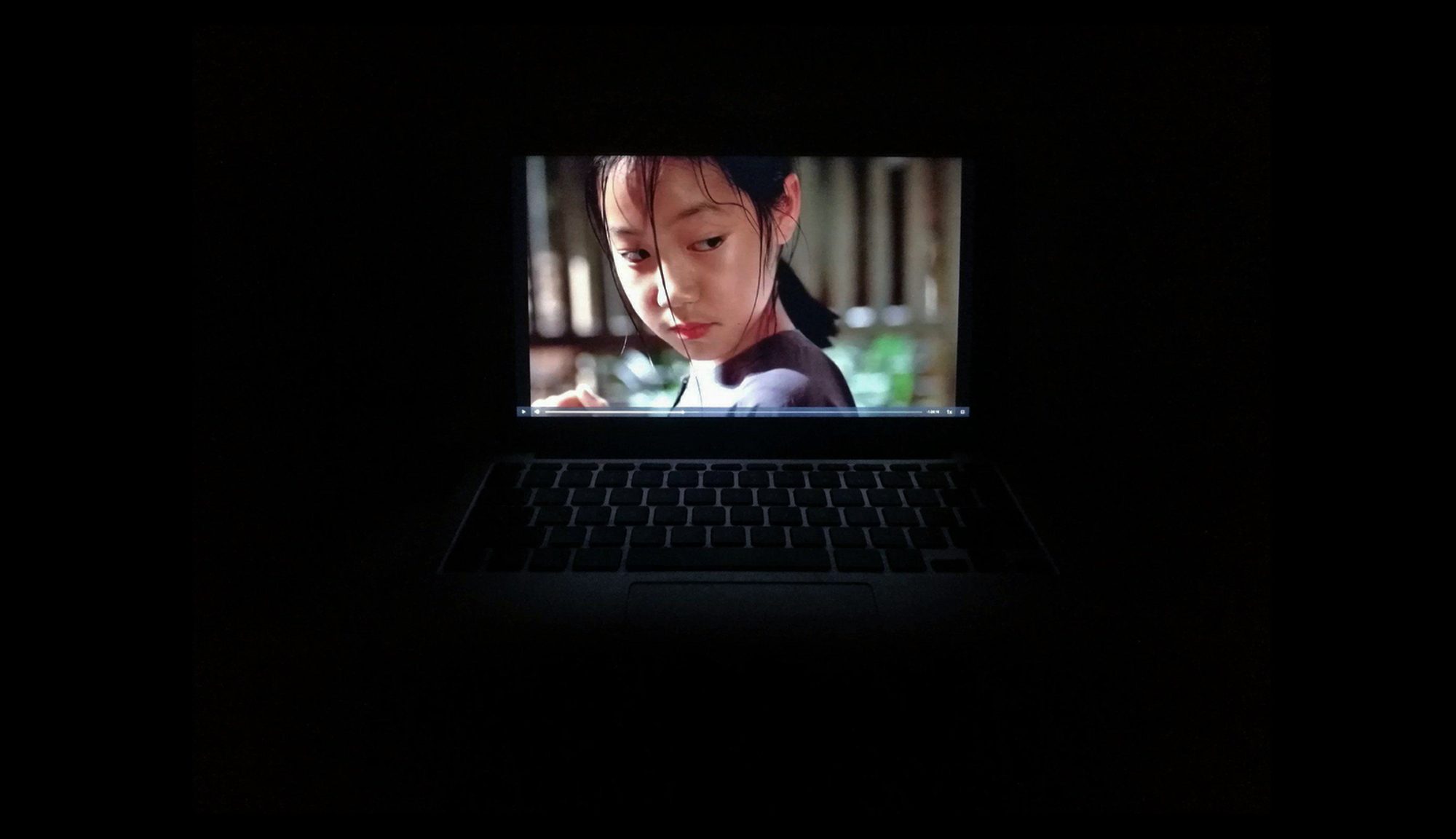
A few weeks ago, I learned that one of the arguments filmmakers used against the screening of films at home, on a television set, was that the theater experience is an essential component to the movie experience. The idea was that, at home, the viewer does not have access to the dark room (full of movie enthusiasts like yourself), the big screen, and the loud sound systems that movie theaters encompass. While it is true for the most part, they also fail to include the fact that in such theater rooms, an individual lacks any power to control certain aspects of the experience. The only thing one can choose, at times, is where to sit; that means, however, that the majority of viewers will not have the most ideal angle of view; what’s more, if you sit very close to the edge, the left speakers, for instance, might be too loud and throw you off. This is why I think selecting a seat by the center is the best spot. Screening a film at home, on the other hand, also has its cons.

Yesterday, the day after thanks giving, I felt like watching a film. I selected a movie from Kanopy, an online streaming service free to Hunter students. In contrast to movie theaters, where one has a very limited choice of films, I had many films I could jump into either by chance or by rigorous selection. I found a film from 1991 under the category of World Cinema’. I selected The Scent of Green Papaya after a number of times checking out trailers for films within the category on YouTube. For this particular film, though, I did not find any trailers; instead, I found clips which gave me a strong reference point from which I was able to foresee how the film was going be like. Initially, I had whole-wheat bread with Hershey syrup in it. Later, I ate the rest of a Pringles can my brother had left in the fridge.

Several times throughout the film, I found myself adjusting the angle of the screen (tilting up or down) based on how I was sitting. My couch is particularly uncomfortable, and my body was tired because I had worked an 8-hour shift from 8:30 in the morning. Also, I controlled the volume and screen brightness a few times in order to get the precise level of visibility and sound I wanted. I was very self-aware about my actions since I was thinking of writing a paper for this prompt. Nevertheless, this did not take my concentration off the narrative. I was able to dive into it, and by the time it was done, I was eager to watch more. I had many questions about what had happened during the 10-year time lapse in the movie, and I had questions about the future of the characters all the same. Very seldom do I have this feeling when coming out of movie theaters. In fact, I do not think I have ever had this experience in a movie theater because (I think) it has always been about entertainment, in contrast to intellectual or aesthetic enjoyment. The fact is that, to my knowledge, few of the big-shot theaters, such as amc®, screen movies of the Drama genre. Yes, there is plenty of drama in block-busters; but there is no silent drama: the type of movie that keeps you watching and thinking, as opposed to feeding you with information on and on.

In all honesty, I am not trying to say that my particular experience at home was best in relation to a movie theater experience. I still lack many important aspects that can ultimately draw me into a film. Normally, when I screen at home I watch the film on my 40-inch TV screen. Yesterday, I felt lazy to connect the laptop and the speakers.

I dream of creating a home theater one day, where the screen size, its resolution, the quality and volume of the sound, as well as the positioning and comfortableness of the seats will be adjusted to my preferences. Ultimately, this will provide me the optimal viewing experience.